Português
 Español
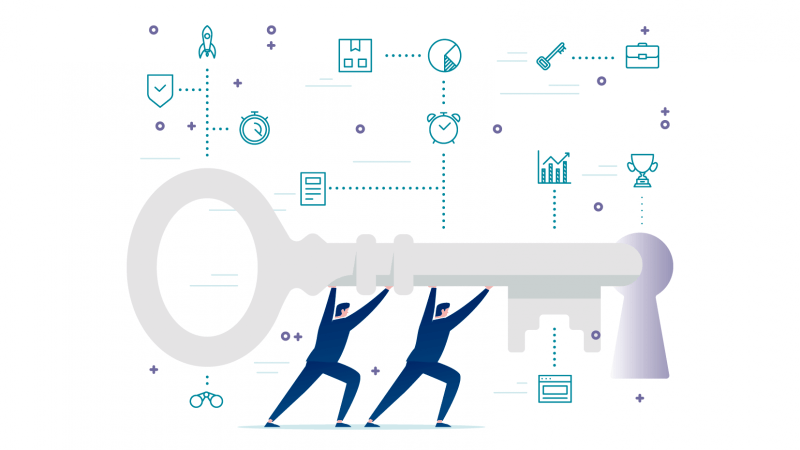
In an increasingly complex, competitive, and data-driven business environment, the ability to align business processes with corporate strategy has become a decisive differentiator for organizations that want to grow efficiently and predictably. Many companies even have well-defined strategies—expansion goals, productivity gains, customer focus, or innovation—but their internal processes do not follow these guidelines. This is where specialized consulting acts as a transformative agent, establishing connections between strategic vision, operational execution, and measurable results.
The challenge: processes that do not reflect the strategy.
As organizations grow and new technologies adopt, it’s natural for processes to become complex, redundant, or simply outdated. Departments begin to operate in isolation, systems stop communicating with each other, workflows become bureaucratic, and employees adopt different practices for the same task. The result is a misalignment between what the company wants to achieve and what it can actually deliver.
When the strategy emphasizes agility, but the process requires multiple manual approvals, there’s a problem. When the goal is to be a benchmark in customer experience, but internal workflows are slow and poorly integrated, there’s also a mismatch. Consulting emerges to map these discrepancies and propose structured ways to eliminate them.
How does consulting align strategy and processes?
The work begins with a holistic view. The consultancy analyzes strategic objectives, key performance indicators (KPIs), organizational culture, technologies used, and the maturity of existing processes. This systemic view allows for the identification of which processes support the strategy, which need improvement, and which should be completely redesigned.
1. In-depth diagnosis
This stage involves interviews with leaders and teams, document analysis, collection of performance data, and direct observation of workflows. The goal is to understand how the company actually operates and what points hinder strategic progress. Bottlenecks, rework, manual operations, lack of standardization, and inappropriate use of technological resources are clearly highlighted.
2. Process mapping and redesign
Based on the diagnosis, the consulting firm creates detailed process maps (AS IS) and proposes a new design (TO BE) aligned with the strategic plan. These new workflows aim not only to correct problems, but also to incorporate best practices, automation, technological integrations, and performance indicators that allow for continuous monitoring.
3. Defining governance and prioritization
Processes don’t work without clear governance. Consulting establishes roles and responsibilities, levels of authority, SLAs, indicators, and decision-making mechanisms. It also helps define the order of implementation of improvements, according to impact, urgency, and available resources. This avoids scattered investments and focuses efforts where there is the greatest strategic return.
4. Modern management techniques and technology
Methodologies such as Lean, BPM, Six Sigma, Design Thinking, and agile frameworks are part of the consultancy’s toolbox. Furthermore, integration with technologies like automation (RPA), analytics, low-code platforms, and generative AI allows for accelerating process efficiency and bringing them even closer to data-driven business strategy.
Direct benefits of strategic alignment through consulting.
When processes and strategy work together, the benefits appear quickly:
- Increased operational efficiency
Redundant activities are eliminated, rework is reduced, and productivity increases. - Best customer experience
More fluid processes make the customer journey faster, simpler, and more satisfying. - Cost reduction
Resource optimization, automation, and standardization generate significant savings. - More strategic decision-making
With structured processes, indicators begin to reflect operational reality and allow for more informed decisions. - Strengthened organizational culture
Teams begin to work with clarity of purpose, responsibility, and focus on business objectives. - Greater capacity for innovation
Clear and integrated processes create room for testing, continuous improvement, and the adoption of new technologies.
Aligning business processes with corporate strategy is essential to ensure that the company can execute its plans. Specialized consulting acts as a facilitator in this journey, bringing solid methodologies, independent vision, and technical knowledge capable of transforming strategic objectives into concrete results. In a market that demands agility, precision, and adaptability, having this support is more than an advantage — it’s a necessity for organizations that want to remain relevant and competitive in the long term.