Português
 Español
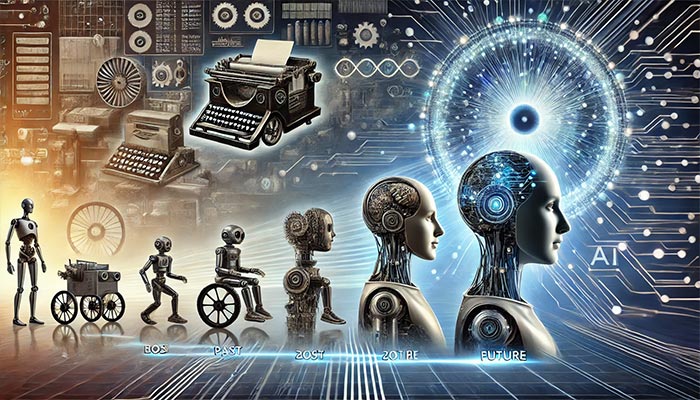
Business process transformation has always been a fundamental pillar for companies seeking efficiency, competitiveness, and innovation. In recent years, this transformation has evolved from simple mapping and continuous improvement initiatives to a more strategic approach, based on emerging technologies among them, two stand out as protagonists of the future: intelligent automation and regenerative artificial intelligence (generative AI).
These technologies are completely reshaping how organizations think, operate, and deliver value to customers. More than a trend, they represent a new paradigm of efficiency and operational intelligence.
What is intelligent automation?
An intelligent automation combines robotic process automation (RPA) with artificial intelligence, machine learning and advanced data analysis. Unlike traditional automation — which performs repetitive tasks based on fixed rules — intelligent automation is capable of learning, adapting and making decisions based on data and behavioral patterns.
In practice, this means that processes that were previously manual and complex, such as document analysis, request triage, customer service, and audits, can be automated end-to-end, with a high degree of accuracy and autonomy.
With intelligent automation, companies can reduce operational costs, reduce human error, improve productivity and free up professionals for more strategic activities. But the impact goes beyond that: it is a catalyst for digital transformation because it connects systems, data, and people in a fluid and integrated way.
The role of generative AI in this evolution.
Generative AI is one of the most disruptive technologies of our time. Based on deep learning models, it is capable of creating new content, ideas and solutions from large volumes of data.
In the context of business process transformation generative AI acts as a powerful engine for innovation. It can:
- Automatically generate optimized process flows, identifying bottlenecks and proposing improvements.
- Create technical documentation, reports, and internal policies based on historical and regulatory data.
- To assist in decision-making, simulating business scenarios and projecting results.
- Personalize the customer experience, adjusting communications and services according to each user’s profile and behavior.
In short, generative AI transforms the way organizations analyze, design, and execute their processes, enabling an unprecedented level of agility, customization and operational efficiency.
Synergy between automation and AI: the new operating model
When combined, intelligent automation and generative AI form what many experts call cognitive enterprise — an organization capable of continuous learning, anticipating trends, and reacting autonomously to market changes.
This new operating model brings tangible benefits:
- Reducing process execution time up to 60%.
- Reduction of operational failures through the automation of critical decisions.
- Improvement in predictive analytics, based on real-time data.
- Accelerated innovation since AI can generate new products, services, and business models.
As a result, companies are no longer solely dependent on human experience for process improvement and are starting to rely on intelligent systems that learn, create, and evolve.
The cultural and organizational impact
Despite the technological advantages, the success of this transformation does not depend solely on the adoption of advanced tools. It is essential to prepare the organization and people for this new era.
Intelligent automation and generative AI require a change in mindset. Professionals must be empowered to collaborate with intelligent systems, interpreting insights and making strategic decisions based on data. Leadership, in turn, needs to promote a culture of innovation, ethics, and continuous learning.
Another important point is AI governance. With the increased autonomy of systems, the need to guarantee [safety] also grows.transparency, security and regulatory compliance. Companies that use generative AI must ensure that their models are auditable, ethical, and aligned with privacy regulations, such as the LGPD (Brazilian General Data Protection Law).
The role of specialized consultancies
Consulting services to business process transformation play an essential role in this context. They help companies to assess digital maturity, identify automation opportunities, redesign workflows, and implement AI solutions in a scalable and secure way.
In addition, they provide structured methodologies, based on international frameworks — such as Open Digital Architecture (ODA) and the Digital Maturity Model (DMM) from TM Forum — ensuring that technological transformation is aligned with corporate strategies and business objectives.
The future of business process transformation is being written now — driven by intelligent automation and generative AI. Companies that understand and adopt these technologies will come out ahead, achieving efficiency, agility and sustainable competitive advantage.
More than just tools, these innovations represent a new way of thinking and operating: Learning processes, evolving decisions, and organizations that continually reinvent themselves.
Investing in intelligent automation and generative AI is no longer an option — it’s the next natural step for companies that want to thrive in the digital age.